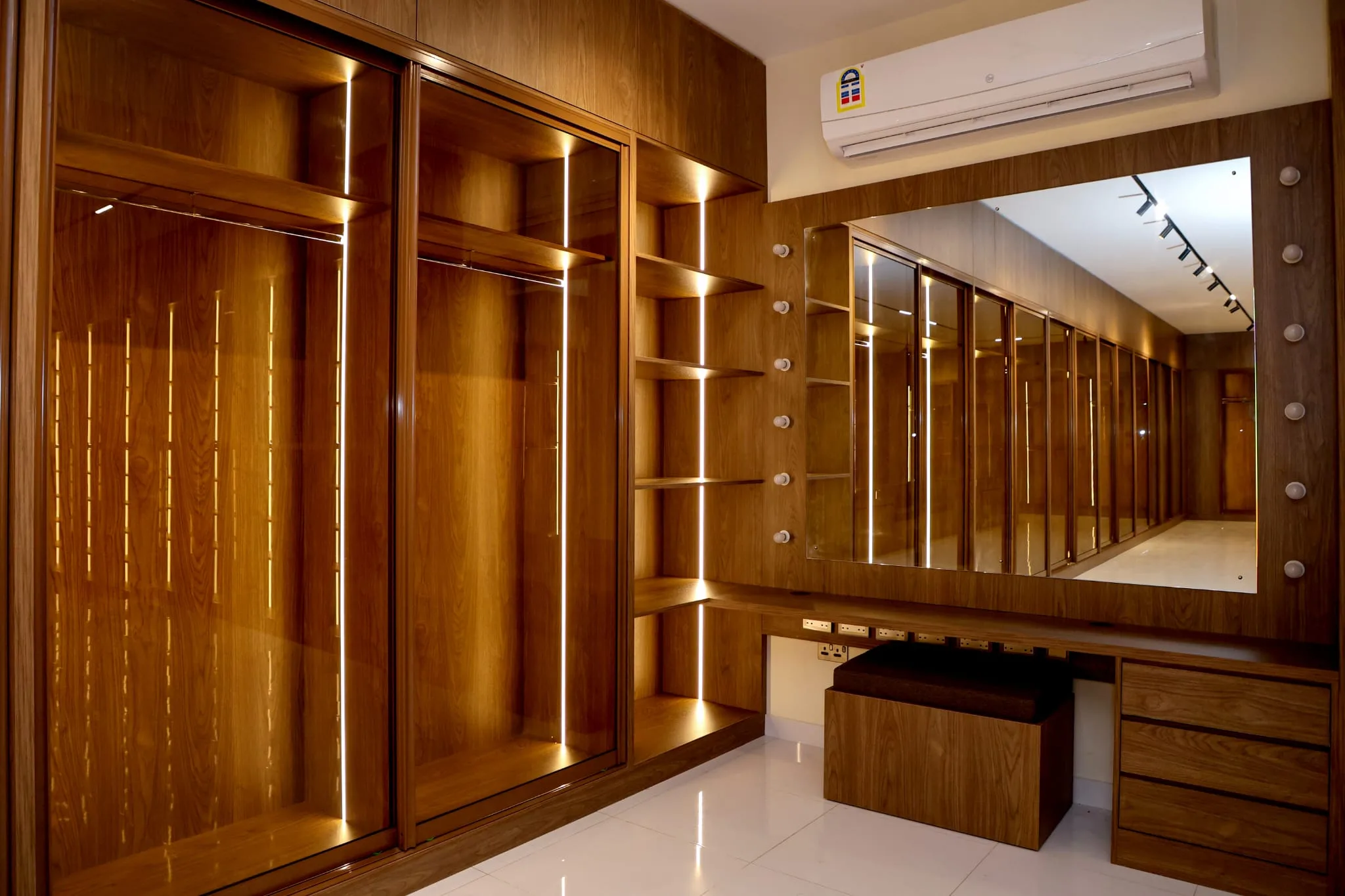
Updated September 2026 · A neutral buyer's guide
Most of what makes a high-end interior feel bespoke — the wardrobes, the reception desk, the wall panelling, the cabinetry — is joinery, and where and how it is made changes everything. Working with a contractor that has its own joinery factory is a different experience from one that subcontracts. This guide explains what an in-house factory means for your project, how the process works, and what to look for.
01What an in-house joinery factory means
An in-house joinery factory is a workshop the contractor owns and runs, where bespoke cabinetry, wardrobes, panelling and furniture are manufactured to measure before being installed on site. It means the company designing your interior is the same company building the joinery — no outside workshop in the middle. Al Hafeed Interior runs its own joinery factory in Salmabad for exactly this reason.
02The design-to-installation process
- Design and shop drawings: your joinery is detailed into precise manufacturing drawings.
- Material selection: boards, finishes and hardware are chosen — see our materials and finishes guide.
- Manufacturing: the pieces are cut, assembled and finished in the factory, in parallel with site works.
- Installation: finished units are delivered and fitted by the same team, right into corners and up to the ceiling.
03Factory-made vs subcontracted
When a contractor subcontracts joinery, it depends on an outside workshop's queue, quality and lead time — and the accountability is split. An in-house factory keeps quality control, tolerances and the programme under one roof, so bespoke items can be built while the site is being prepared. That usually means better finish consistency, tighter timelines and one company responsible if anything is not right. See our joinery and fitted wardrobes guide for the quality signals to look for.
04What to look for in a joinery factory
- It genuinely exists and you can visit it — not a claim, a real workshop with machinery and a team.
- Modern machinery and skilled joiners for precise, repeatable work.
- Quality hardware — soft-close hinges and runners, good handles and mechanisms.
- A track record of completed joinery you can see in person.
05Visiting the factory
Ask to visit before you commit. A factory visit tells you more than any brochure: the standard of work in progress, the machinery, the finish quality, and whether the team takes pride in the detail. It also reassures you that the company can actually deliver what it promises. A contractor confident in its work, like Al Hafeed Interior, will welcome the visit.
Signs of a serious joinery factory
- You can visit a real workshop with machinery and a team.
- Bespoke items are made to measure, not adapted from stock.
- Quality soft-close hardware is standard.
- Finishes are flush, joints square and consistent.
- There are named, completed joinery projects to view.
Frequently asked questions
What is the advantage of a contractor having its own joinery factory?
An in-house factory means the company designing your interior also manufactures the joinery, so quality, tolerances and lead times are controlled under one roof and there is a single point of accountability. Bespoke items can be built in parallel with the site works, which shortens the programme, and the finish is more consistent than work passed to an outside workshop. Al Hafeed Interior runs its own factory in Salmabad.
How does the joinery manufacturing process work?
Your joinery is first detailed into precise shop drawings, then the boards, finishes and hardware are selected, the pieces are cut, assembled and finished in the factory (in parallel with site works), and finally the finished units are delivered and installed by the same team. Keeping all of this in-house is what makes bespoke joinery fit properly and finish to a high standard.
Is factory-made joinery better than subcontracted joinery?
Generally, yes. When a contractor subcontracts joinery it depends on an outside workshop's queue, quality and lead time, and accountability is split. An in-house factory keeps quality control and the programme under one roof, so items are built while the site is prepared, the finish is more consistent, and one company is responsible for the result.
Can I visit the joinery factory before committing?
You should. A factory visit shows you the standard of work in progress, the machinery, the finish quality and whether the team takes pride in the detail — far more than a brochure can. A contractor that is confident in its work will welcome the visit. Al Hafeed Interior's factory is in Salmabad, Bahrain.
What should I look for in a good joinery factory?
Look for a real, visitable workshop with modern machinery and skilled joiners, made-to-measure work rather than adapted stock, quality hardware such as soft-close hinges and runners, flush consistent finishes with square joints, and a track record of completed joinery you can see in person. These are the signs a factory can deliver bespoke work reliably.
Want joinery made properly?
Al Hafeed Interior designs, manufactures and installs bespoke joinery, cabinetry and fitted wardrobes from our own factory in Salmabad, Bahrain, established in 2003. Tell us what you need — and ask to visit the factory — and we will prepare a detailed, fixed-price proposal, with no obligation.